Health and Safety Policy for Cranford Skip Hire
 Purpose: This Health and Safety policy sets out how Cranford Skip Hire will manage and reduce risks associated with waste collection, skip hire and rubbish removal across our service area. The policy applies to all employees, drivers, contractors and anyone engaged on behalf of the company. It reflects our commitment to safe operations in a rubbish company service area environment and to continuous improvement in safety performance. The policy aims to protect people, the environment and property while delivering reliable skip hire services and waste collection solutions.
Scope: This policy covers operational activities including skip placement and collection, on-site waste handling, vehicle loading and unloading, manual handling of bags and bulky waste, site traffic management and storage of potentially hazardous materials. It covers the full range of our rubbish removal and waste management services within the company's operational area and applies to temporary works, short-term hires and contracts with third-party partners.
 Responsibilities: Senior management will provide leadership and resource allocation to ensure legal compliance and best practice, while line managers and supervisors will ensure that staff are trained, competent and supervised. Employees must follow safe systems of work, use provided personal protective equipment (PPE) and report hazards and near misses promptly. Contractors and subcontractors are required to meet our safety standards before and during any work on-site. We expect every team member to contribute to a culture of safety and to stop work where there is an immediate danger.
Risk Assessment and Control Measures
Risk assessments will be carried out for all routine and non-routine tasks. Assessments will identify hazards related to vehicle movements, manual handling, working at the roadside, interaction with members of the public and handling of mixed waste streams. Controls will be implemented using the hierarchy of control: elimination, substitution, engineering controls, administrative controls and PPE. We will maintain written safe systems of work for skip placement and waste transfer and implement clear exclusion zones to separate pedestrians from operational activity in high-traffic rubbish collection areas.
 Training and Competence: All staff will receive induction training on company safety standards and role-specific training such as vehicle safety checks, safe lifting techniques, loading protocols and hazardous waste awareness. Drivers will be trained in secure load practices and defensive driving to reduce risk during collections across the service area. Training records will be maintained, reviewed regularly and updated when new equipment or procedures are introduced to the rubbish removal service.
Equipment and PPE: The company will provide appropriate PPE including hi-visibility garments, gloves, safety footwear and eye protection where needed. Vehicles and lifting equipment will be inspected daily and subject to scheduled maintenance checks. Tools and lifting aids will be used to reduce manual handling risk. Safe storage and regular maintenance reduce the likelihood of breakdowns that could contribute to unsafe conditions during skip hire operations.
Operational Controls, Incident Reporting and Emergency Preparedness
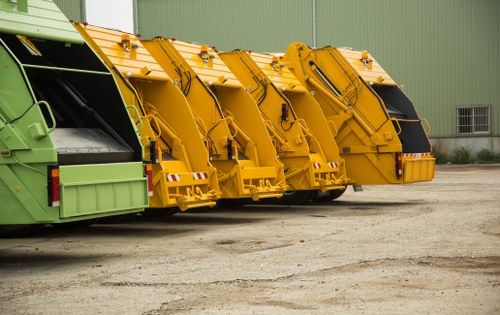 Operational Controls: We will implement traffic management measures when loading or placing skips on streets or private property. Signage, cones and trained staff will be used to manage vehicle movement and pedestrian flow in rubbish company service areas. Loading bays and collection points will be assessed for stability, access and visibility prior to works to prevent slips, trips and falls. Waste segregation procedures reduce hazards associated with mixed or hazardous waste streams and support safe disposal.
Incident reporting and investigation are central to our continuous improvement approach. All accidents, incidents and near misses must be reported promptly using our internal reporting process. Investigations will determine root causes and identify corrective actions. Findings will be communicated to staff and integrated into training and risk assessments to prevent recurrence. We will use a no-blame approach focused on learning and improving safety performance across our skip hire and rubbish clearance operations.
 Emergency Preparedness: Emergency procedures will be established for vehicle incidents, fires, hazardous spills and medical emergencies. Staff will be trained in basic first aid and evacuation procedures. Spill kits and fire extinguishers will be available on vehicles and at main operational sites. We will liaise with emergency services where required and ensure that emergency contacts and procedures are accessible to all employees without sharing external contact details in this policy document.
Contractor Management and Subcontracting: Contractors engaged to perform work on behalf of Cranford Skip Hire must demonstrate competency, provide their own risk assessments and method statements and comply with our safety rules. Prior to any subcontracted rubbish collection or skip placement, we will assess contractor health and safety performance and include safety requirements in contracts. Regular audits and site inspections will be carried out to ensure ongoing compliance with agreed standards.
Monitoring, Review and Continuous Improvement: The policy will be monitored through routine audits, performance metrics and regular safety meetings. Key performance indicators will include incident frequency, training completion rates and audit outcomes. The policy will be reviewed at least annually or when operational changes occur. Improvements will be made based on audit results, incident investigations and staff feedback to strengthen safety across our rubbish removal and skip hire services.
Communication and Worker Involvement: Effective communication ensures that safety information is shared and understood. Toolbox talks, notices and digital briefings will be used to update staff on changes to procedures, lessons learned and safety alerts. Employee involvement in safety committees, hazard spotting and safety suggestion schemes is encouraged to harness frontline knowledge and maintain a proactive safety culture.
Policy Commitment: Cranford Skip Hire is committed to the highest practicable standards of health, safety and welfare for employees and others affected by our operations. This policy will be implemented and maintained through active management, staff engagement and regular review. Everyone working with or for the company has a role in making our skip hire and rubbish clearance operations safe and sustainable across the service area.
Final Statement: By fostering a positive safety culture, ensuring effective risk management and delivering ongoing training, Cranford Skip Hire aims to provide dependable waste collection and skip hire services while protecting people and the environment. This policy is a living document and will evolve as the business and industry best practices develop.
Signed on behalf of Cranford Skip Hire Management — commitment to implement and maintain this policy is required at all levels of the business.